sexta-feira, 24 de janeiro de 2014

Sexta-feira Figurativa / Figurative Friday

I have decided to do a series of posts on Friday featuring idiomatic phrases in English, and named it "Figurative Friday". Idiom is sometimes easily translated in its simple literal sense, while remaining very difficult to understand for people that speak other languages, especially when they have not encountered a particular expression before. When translating from English, translators or English learners have two basic choices: to translate the phrase literally (and then, if you are a translator, explain its meaning in parentheses), or find an equivalent phrase in the destination language - which may or may not exist, and if it does, is likely to be expressed very differently . Either way, idiomatic expressions are very interesting for the translator, and lend color and particularity to different languages and cultures. Leave a comment if you happen to know equivalent idioms in Portuguese!

Eu decidi fazer uma série de posts na sexta-feira com frases idiomáticas em inglês, e a chamarei de "sexta-feira figurativa". Tais frases são algumas vezes facilmente traduzidas para seu sentido literal, enquanto permanecem muito difícil de entender para pessoas que falam outras linguas. Enquanto são traduzidas do inglês, os tradutores ou estudantes da lingua têm duas escolhas básicas: traduzir a frase literalmente (e depois, se for tradutor, explicar seu significado entre parênteses), ou achar uma frase equivalente na linguagem destino - o que pode ou não existir, e se existe, provavelmente será expressa de maneira bem diferente. De qualquer jeito, expressões idiomáticas são interessantes para o tradutor, e dão cor e particularidade às diferentes linguas e culturas. Deixe um comentário se por acaso saiba frases equivalentes em português!


A bit much (mainly British)
If something is excessive or irritating, it is a bit much.
Se algo é excessivo ou irritante, é um pouco demais.
Tradução literal: um pouco muito.
Tradução aproximada: um pouco demais/um pouco exagerado.

A bridge too far

How can a bridge be too far?!
A bridge too far is when a person reaches beyond their capabilities - going too far and getting into trouble or failing.
Uma ponte longe demais é quando alguém tenta alcançar além de suas capacidades - indo muito longe e achando encrenca ou falhando.
Tradução literal: uma ponte muito longe.
Tradução aproximada: uma ponte longe demais.

A chain is no stronger than its weakest link
This means that groups are vulnerable because the weakest person or part can always damage or break them.
Isso significa que grupos são vulneráveis porque a pessoa ou parte mais fraca pode sempre danificar o quebrá-los.
Tradução aproximada: uma corrente não é mais forte que sua liga mais fraca.

A day late and a dollar short (mainly American)
If something is a day late and a dollar short, it is too little, too late.
Se algo está um dia atrasado e com menos um dollar, é muito pouco e muito tarde.
Tradução aproximada: um dia atrasado e um dollar a menos.

A fool and his money are soon parted
People who aren't careful with their money spend it quickly.
Pessoas que não cuidam de seu dinheiro o gastam rapidamente.
Tradução literal: um tolo e seu dinheiro são rapidamente separados.
Tradução aproximada: Um tolo perde seu dinheiro facilmente.
Frase equivalente: Dinheiro na mão é vendavál.

A fool at 40 is a fool forever
If someone hasn't matured by the time they reach forty, they never will.
Se alguém não amadureceu quando chegou aos 40 anos de idade, nunca irá amadurecer.
Tradução aproximada: um tolo aos 40 é um tolo para sempre.

A fresh pair of eyes
A person who is brought in to examine something carefully is a fresh pair of eyes.
Uma pessoa trazida para examinar algo cuidadosamente é um par fresco de olhos.
Tradução aproximada: um par fresco de olhos.

A hitch in your giddy-up (mainly American)
This means the person is not feeling well.
Isso significa que a pessoa não está se sentindo bem.
Tradução aproximada: Há dificuldades em seu melhorar de rítmo.

A lick and a promise (mainly American)
If you give something a lick and a promise, you do it hurriedly, most often incompletely, intending to return to it later.
Se você der uma lambida e uma promesa em algo, você o faz com pressa, na maioria das vezes sem terminar, com a intenção de voltar mais tarde.
Tradução aproximada: uma lambida e uma promessa.

quarta-feira, 22 de janeiro de 2014

Elementos da Ação no Direito Brasileiro: Breves apontamentos / Elements of Actions in Brazilian Law: Brief Overview

Esse texto bem técnico precisou de pesquisa da minha parte para achar termos e conceitos da lei brasileira equivalentes em inglês. É constituído de breve apontamentos a respeito dos elementos da ação no direito brasileiro, que pode ajudar leitores estrangeiros interessados no sistema jurídico brasileiro, especialmente advogados ou tradutores jurídicos. Também pode ajudar estudantes do direito brasileiro ou pessoas leigas que querem saber como funciona uma petição.
 
Os elementos da ação servem para a identificação da ação, o que torna possível a prevenção da sua repetição em juízo, impossibilitando, destarte, a ocorrência da litispendência (mesma ação proposta quando outra idêntica está em curso), ou mesmo evitar a ocorrência da coisa julgada (quando a mesma ação é proposta após ter sido julgada anteriormente). Uma ação é idêntica à outra quando tem as mesmas partes, a mesma causa de pedir e o mesmo pedido.

É importante estudar os elementos da ação porque estes se encontram entre os requisitos da petição inicial e levam ao reconhecimento dos elementos indispensáveis para evitar o indeferimento desta.

São elementos da ação: partes, pedido (mérito) e causa de pedir.

Partes

sujeito ativo -> autor

sujeito passivo -> réu

vários autores -> litisconsórcio ativo

vários réus -> litisconsórcio passivo

vários autores + vários réus -> litisconsórcio misto

Pedido

Consiste na pretensão deduzida em juízo pelo autor (ou mais tarde no processo, pelo réu).

Pode ser:

Pedido imediato: confunde-se com o Provimento solicitado. Pode ser Declaratório (Explicativo. Criado para consertar ou elucidar o que antes estava incerto ou duvidoso), Condenatório (sentença ou julgamento que condena alguém a fazer, dar, or pagar algo, ou que declara que seu pedido ou pretensões são infundadas) ou Constitutivo (cria ou modifica uma relação jurídica - há a criação de um novo estado jurídico).

Pedido mediato: Constitui o próprio bem material ou imaterial almejado. Como, por exemplo, a entrega de certo imóvel ou o recebimento de determinado crédito.

Para que haja identidade de ações, quer para fins de litispendência ou de coisa julgada, é necessário que, além da identidade das partes e da causa de pedir, tanto o pedido mediato quanto o imediato tem que ser idênticos.

Causa de pedir

Fato jurídico que ampara a pretensão deduzida em juízo, bem como seus efeitos. Em outras palavras, é a explicação do porquê se pede alguma coisa em juízo.

Por fundamento jurídico não se entende a citação de textos legais ou normativos, argumentos de doutrina ou jurisprudência (tanto é que ações sem estas citações não são ineptas). As citações são necessárias para produzir o convencimento, porém, não são obrigatórias.

A causa de pedir pode ser:

Próxima: se confunde com o fato jurídico que ampara a pretensão.

Remota: consiste nos efeitos do fato jurídico.

Para verificação da similitude de ações também é exigido que a causa de pedir próxima e remota sejam idênticas. Ações idênticas pressupõem identidade de partes, do pedido (mediato/imediato) e da causa de pedir (próxima e remota).

Toda ação dá ensejo à defesa. O princípio do contraditório ensina que ações não são unilaterais e a outra parte tem o direito de agir para se defender. Se para a propositura da ação são indispensáveis a legitimidade e o interesse de agir, o mesmo deve ocorrer com a defesa.

Tipos de defesa

Contestação: Forma mais corriqueira de defesa, o réu insurge-se contra pretensão deduzida na petição inicial (pode alegar, ainda, falta de condição da ação ou deficiência processual ou procedimental).

Reconvenção: O réu amplia o tema a ser decidido, trazendo pretensão relacionada com a deduzida pelo Autor, e a ser decidida pelo mesmo Juízo.

Nas exceções em sentido estrito (exceções que não podem ser alegadas pelo juíz) o autor alega fatos como:
Incompetência: Apenas para incompetência relativa. Não pode ser conhecida de ofício e a sua não-oposição acarreta prorrogação da competência.
 
Impediment: Em regra, as hipóteses de impedimento referem-se a uma relação interna com o processo.
 
Suspeição: refere-se a uma relação externa ao processo. É algo que afeta a imparcialidade do juiz e que encontra-se fora do processo.

As exceções são classificadas em exceção processual (deficiências no direito de ação, na relação processual ou no procedimento) e exceção substancial (voltada ao mérito da demanda). Podem ser diretas (defesa contra a própria pretensão em si) ou indiretas (alegações de fato impeditivo, modificativo ou extintivo do direito do autor).
 
Quanto aos efeitos as Exceções (defesas) podem ser:

Dilatórias: há simples dilação do curso do processo, como no caso de exceção de suspeição ou incompetência do juízo.

Peremptórias: busca extinguir a relação jurídico-processual, como no caso de se alegar a ocorrência de coisa julgada.


This rather technical text required some research on my part in order to find equivalent terms in English for Brazilian law terminologies and concepts. It serves as a brief overview of the elements of an action in Brazilian law, which might help foreign readers who are interested in the Brazilian legal system, particularly lawyers or legal translators; it might also assist either Brazilian law students or interested laypeople in understanding how a court action works.

The elements of actions serve to identify them, which enables repetition in judgement to be prevented, making, thus, the incidence of lis pendens impossible (when the same proposed action is identical to the current), or even to avoid the incidence of the res judicata (when the same action is proposed after it has been judged previously). An action is identical to another when it has the same parts, the same cause of action and the same request.

It is important to study the elements of an action because these are among the requisites of an initial request, and lead to the recognition of its essential elements, ensuring that the initial application is not refused.

These are the elements of an action: parties, request (merits) and cause of action.

Parties

active subject-> plaintiff

passive subject-> defendant

several plaintiffs-> coplaintiffs

several defendants-> codefendants

several plaintiffs + several defendants-> coparty

Request
 

This consists of the claim on behalf of the plaintiff, or the defendant if the action is at a later stage.

It comprises:

Immediate request: This is the law article upon which the petition is based. It can be declaratory (explanatory; designed to fix or elucidate what before was uncertain or doubtful), condemnatory (sentence or judgment which condemns someone to do, to give, or to pay something, or which declares that his claim or pretensions are unfounded) or constitutive (creates or modifies a legal relationship - a new legal status is created).

Indirect request: This constitutes the material things or immaterial things wanted. For example, the delivery of certain property or the receiving of determined credit.

For there to be identical actions, for lis pendens or for res judicata to occur, it is necessary that, besides the parts and cause of action being identical, the indirect and immediate requests are also identical.

Causes of Action


Legal fact that supports the claim being made, as well as its effects. In other words, it is the explanation for why something is requested in court.

Legal basis is not the citation of legal or prescriptive texts, arguments of doctrine or jurisprudence. Such citations are necessary to produce a conviction, though they are not compulsory (if this wasn't so, actions without such sitations would be inept).

The cause of action can be:

Near: basis of the legal fact that supports the claim.

Remote: this consists of the effects of the legal fact.

Additionally, to check whether actions are similar, it is required that the near and remote cause of action are identical. Identical actions presuppose identity of parts, of the (indirect / immediate) request and of the cause of asking (near and remote).

Any action gives opportunity to the defense. The "principle of the contradictory" teaches that actions are not unilateral and the other party has a right to act in his defense. If for the filing of the action the plaintiff's legitimacy and interest are essential, the same takes place with the defense.

Types of defense

Challenge: the most ordinary form of defense. The defendant contests the claim present in the initial application (they may also allege that the prerequisites for the commencement of legal proceedings were absent, or that procedural deficiencies occurred).

Counterclaims: The defendant expands the scope of the judgment, bringing a claim against the plaintiff, which is connected with the plaintiff's initial claim, to be decided by the same court.

To claim exceptions in a strict sense (exceptions that cannot be determined by the judge) the plaintiff alleges facts such as:

Incompetence: Only admissible for relative incompetence. Cannot be alleged by the court, and the failure of contending parties to claim it means that competence will be assumed.

Impediment: As a rule, impediments refer to an internal relation to the process.


Suspicion: this refers to a fact external to the process. It is something that affects the impartiality of the judge and that is not part of the action.


Exceptions are classified as procedural exception (there are deficiencies in the prerequisites for the commencement of legal proceedings or procedural deficiencies) and substantial exception (directed at the merit of the demand). They can be direct (defense against the claim itself) or indirect (allegations of impeditive, modificative or extintive facts against the right of the plaintiff).
 
The exceptions claimed by the defense, termed effects, can be:

Dilatory: there is simply a delay in the course of the process, as in the case of exception due to suspicion or incompetence of the judge.

Peremptory: this aims to extinguish the action, through the allegation of an exception, such as the allegation of res judicata.

sexta-feira, 17 de janeiro de 2014

My guitar / Mi guitarra

In your sound is a mystery so deep,
And your ardent heart, O my own guitar,
You love to brood, and in your joy there are
Transports of passion and tears that weep.

The dulcet Moor bequeathed to you your heart,
The Iberian, your soul that brooks no fears,
And virgin America, it appears,
Put all your love and treasure for her part.

For this, upon your strings that are my sovereign,
That vibrate with an accent almost human,
It seems, at times, your voice is a lament.

Like a moan of your soul so solitary,
In whose sad and mysterious litany,
It blooms neverending with sentiment.


Translated from Agustín Pío Barrios (aka Agustin Barrios Mangoré): 1885 - 1944

To fit the mood of the poem, here is some of the poet's own music:


Barrios, a Paraguayan, is better known as a virtuoso guitarist and composer of classical guitar music than as a poet. (He's considered by many in the know to be one of the finest guitar composers, and perhaps the greatest of all.) However, he was a very capable poet too when he put his mind to it, though he seems to have been somewhat restricted in his subject matter (often, unsurprisingly, waxing at his most lyrical when the subject was his guitar, as in this poem!). I've translated this from the original Spanish, using essentially the same verse form as Barrios used in order to better represent the significant poetic skill of the original. 

I don't know whether this is true or not, but I have heard that he had this particular poem inscribed on his guitar case and carried it with him to his concerts. If so, it must have had considerable meaning for him as an artist.

This blog is mainly aimed at English and Portuguese speaking readers, of course, but putting the original Spanish into good Portuguese is beyond my own abilities, so I'm simply going to post the original poem too in the hope that any Portuguese speakers who are interested can get the gist. At least the original will be easier for a typical Portuguese speaker than a typical English speaker!


Traduzido de Agustín Pío Barrios (aka Agustin Barrios Mangoré): 1885 - 1944

Para se ajustar ao estado de espirito do poema, acima está uma música do poeta. 

Barrios, paraguaio, é melhor conhecido como um guitarrista virtuoso e compositor de música de violão clássico do que como um poeta. (Ele é considerado por muitos que entendem do assunto um dos melhores compositores de violão, e possivelmente o maior de todos.) Contudo, ele também foi um poeta muito capaz  quando se dedicava a isso, embora pareça ter restringido muito seu assunto (muitas vezes, não surpreendentemente, crescente ao seu mais lírico estado quando o assunto era o seu violão, como neste poema!). Traduzi isto do espanhol original, usando essencialmente a mesma forma de verso que Barrios usou para representar melhor a significante habilidade poética do original.

Não sei se isto é verdade ou não, mas ouvi que ele mandou inscrever este poema na caixa de seu violão e o transportou com ele aos seus concertos. Se esse era o caso, tal poema deve ter tido consideravel importância para ele como artista.

Este blog é principalmente para leitores de inglês e português, naturalmente, mas passar o espanhol para um bom português está além das minhas capacidades, portanto simplesmente irei colocar o poema original aqui também na esperança de que os falantes de português que se interessem possam pegar a essência. Pelo menos o original será mais fácil para um típico falante português do que um típico falante inglês!

Hay un hondo misterio en tu sonoro
y ardiente corazón, guitarra mía,
gozas pensando y hay en tu alegría
transportes de pasión, gotas de lloro.

Te dió su corazón el dulce moro,
el ibero te dió, su alma bravia
y la América virgen, se diría,
puso en tí, de su amor, todo el tesoro.

Por eso en tu cordaje soberano,
que vibra con acento casi humano
es a veces, tu voz como un lamento.

Como queja de tu alma solitaria
en cuya triste y mística plegaria
florece sin cesar el sentimiento. 

Agustín Pío Barrios (aka Agustin Barrios Mangoré): 1885 - 1944


segunda-feira, 13 de janeiro de 2014

On a blossoming rosebush / Em uma frondosa roseira

On a blossoming rosebush

On a blossoming rosebush
unfurls in its thicket
a little black bud.
Beloved Maríllia
has reached out to pick it
with tender white hand.

Those leaves so verdurous
conceal in its fury
a bee's lurking shape:
You touched it, Maríllia,
with your hand so carefree,
and its sting was sharp.

And after it stung her,
Maríllia cried out and
her finger withdrew.
Love then in the herbage
was playing about and
in aid of her flew.

That trifling destruction
and blood droplet spurting
the Goddess soon knew;
so laughing and kissing
the finger so hurting,
I said thus to you - 

"If so much thou makest
of such little scratches,
Ah! give me attention:
Or what am I worth whose
own death wounds and heartaches
rouse not thy compassion?"


Translated from: Tomás Antônio Gonzaga 1744 – c. 1810

I tried to keep as much of the light, jaunty verse movement of the original poem as possible with this translation. I think it helps to preserve the bittersweet, ironic tone of the poem - the poet's cheerful,  lighthearted mockery of his beloved's overreaction to the sting appears underpinned by a deep, brooding resentment at her neglect of him.

It's worth noting that this poet was writing according to the conventions of the Pastoral poetry of his time. "Love" and "The Goddess" are used interchangeably in this poem to represent both the personification of love by reference to the Roman goddess of love, Venus, and his own experience of feeling love. To try to reduce either usage to a single discrete meaning will more likely hinder the reader's understanding of the poem than add to it.

Gonzaga is one of the better known and most significant Brazilian poets of the second half of the 18th century. So far as I know, this is the first time this poem has been translated into English.

Many thanks to Livia for helping with my interpretation of this poem!


Eu tentei manter o máximo do movimento leve e alegre do poema original com essa tradução. Eu acho que ajuda apreservar o tom agridoce e irônico do poema; a zombaria jovial e sem preocupações da reação exagerada de sua amada ao ser picada parece corroborar o resentimento profundo e aborrecido ante à negligência dela perante ele. 

Vale notar que este poeta estava escrevendo de acordo com as convenções da poesia pastoral de seu tempo. "Amor" e "A Deusa" são usados ​​alternadamente neste poema para representar tanto a personificação do amor por referência à deusa romana do amor, Vênus, e de sua própria experiência do sentimento amor. Para tentar reduzir os dois usos em um único e discreto significado provavelmente vai dificultar a compreensão do leitor do poema em vez de ajudar.

Gonzaga é um dos poetas mais conhecidos e mais importantes brasileiros da segunda metade do século 18. Até onde eu sei, esta é a primeira vez que este poema foi traduzido para o Inglês.

Muito obrigado a Lívia pela ajudar com a minha interpretação deste poema (e a tradução dessa parte)!

Lira XX

Em uma frondosa
Roseira se abria
Um negro botão.
Marília adorada
O pé lhe torcia
Com a branca mão.

Nas folhas viçosas
A abelha enraivada
O corpo escondeu.
Tocou-lhe Marília,
Na mão descuidada
A fera mordeu.

Apenas lhe morde,
Marília gritando,
C'o dedo fugiu.
Amor, que no bosque
Estava brincando,
Aos ais acudiu.

Mal viu a rotura,
E o sangue espargido,
Que a Deusa mostrou;
Risonho beijando
O dedo ofendido,
Assim lhe falou:

"Se tu por não tão pouco
"O pranto desatas,
"Ah! dá-me atenção;
"E como daquele,
"Que feres, e matas,
"Não tens compaixão?" 


Tomás Antônio Gonzaga 1744 – c. 1810

sábado, 11 de janeiro de 2014

The Leaf - Chapter 3 / A Folha - Capítulo 3

Chapter 1 / Capítulo 1

Chapter 2 / Capítulo 2 


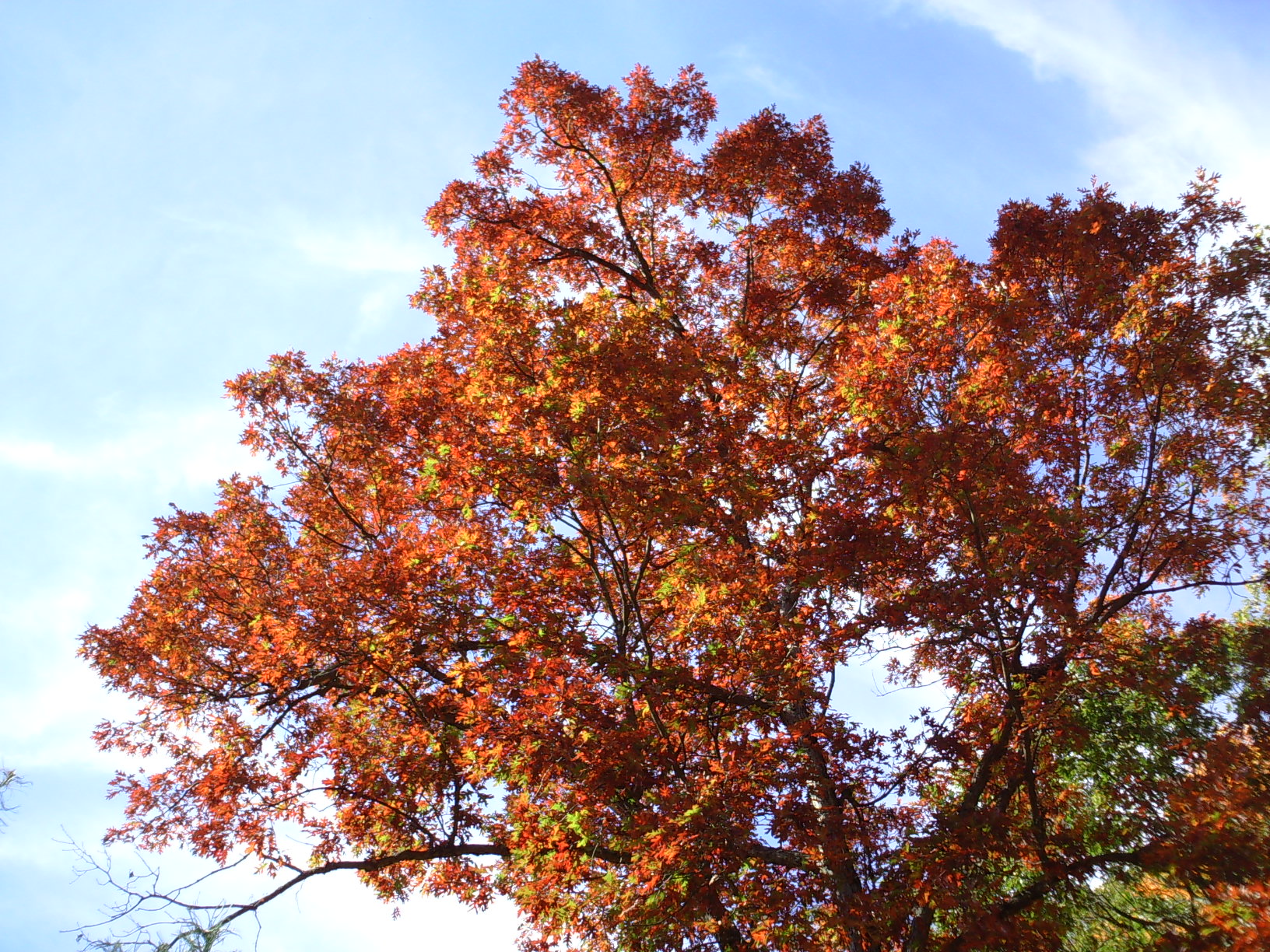
And she felt all at once a lifting of her sorrows and weariness. For, she thought, I can now be happy at last, as I am exactly as I always wanted to be. And she looked up for the first time in ages, and was surprised at how black and dismal the day was, and the wild fury of the wind that blew around, though she could scarcely feel it. And she looked first to the tree she had so long admired, hoping that the leaves would notice how she was now like one of them. But she saw that the branches were bare, and its leaves now nothing more than shrivelled brown husks on the ground, for their kind crumple and fall before those of the oak, and shall do so until the seasons themselves are at an end. And she was astonished by this, and looked back to the leaves around her on the old oak tree, which she had so long ignored. And she saw for the first time how they had all changed, much like herself, and become newly beautiful with the colours of autumn. The leaves she had budded with at spring were now a blaze of reds, yellows, and deep rich browns as though the whole tree were one great fire that fed upon nothing but itself.

She saw then that each one was different from the other, some more, some less, for no two had quite the same mixture of hues and patterns, or were cracked and folded into the same shape. It seemed to her then that they had always been different, even when green, and she might have seen this for herself had she looked more closely. No other leaf was exactly the colour and shape that she had become, but she stood out from the rest no more than before, for all were alike leaves of the oak, and looked together much as the oak leaves always do at this season. And though each one played its own special part, it was but a single tiny tongue of the great many coloured fire that seemed to spring from the branches of the tree, blazing itself away in a final show of glory to make way for the fresh new buds of the coming spring. And each one as it broke off fluttered down to earth where it would fertilize and nourish the roots of the tree through the long harsh winter and give it strength for the future, so that the cycle of life could begin all over again.

And the leaf saw all this for herself at last, and how, for all her trials and all the long waiting for something different to happen to her, now that it had finally come she could claim to be no better – and yet no worse – than any of the leaves around her. She did not feel sorry for what she had become, for she knew now that this had always been meant to be so from the beginning. But still she felt regret for all that she had missed during her long, long wait when she had turned away from the happiness around her. Perhaps, she thought, even now it is not to late to make amends, though I do not doubt that all the others must be feeling as cold and tired as myself, and will doubtless have little enough to spare for me. And she was about to call out to the leaves that still hung from the branch around her, to tell them how beautiful they all were and how sorry she was not to have seen it before. But just then came another puff of wind – no stronger than those before it, but just enough at this moment to snap suddenly the stalk, now become so fragile and easily broken, that still held the leaf to the tree from which she had sprung. She felt herself spinning round and round, blown helpless in the empty air, until at last she landed among the other dead leaves scattered through the grass of the park.

The End.


E ela sentiu um alívio de todas suas tristezas e preocupações de uma só vez. Isso porque ela pensou que agora poderia finalmente ser feliz, por ser exatamente como ela queria ser. E olhou para cima pela primeira vez após muito tempo e ficou surpresa eis que o dia estava bem negro e lúgubre, e o vento soprava furiosamente, embora ela mal podia senti-lo. E primeiro ela olhou para a árvore que por tanto tempo admirou, esperando que suas folhas notassem como ela era agora como elas. Mas viu que os galhos estavam vazios, e suas folhas nada mais do que cascas secas, enrugadas e marrons no chão, pois aquele tipo de folha se amarrota e cai antes dos do carvalho, e continuará assim enquanto as estações passam. E ela ficou espantada com isso, e olhou para as folhas ao lado dela no carvalho, as quais tinha ignorado por tanto tempo. E viu pela primeira vez que todas elas tinham mudado igual a si, e estavam lindas com as cores do autono. As folhas com as quais ela havia nascido do botão na primavera ficaram vermelhas, amarelas e marrons e era como se a árvore toda fosse uma grande fogueira se alimentando de nada além de si mesma.

Então ela viu que todas eram diferentes umas das outras, algumas mais, algumas menos, porque nenhuma tinha a mesma mistura de tonalidades e desenhos, ou estavam partidas e dobradas na mesma forma. Para a folha parecia agora que todas as outras sempre foram diferentes, mesmo quando eram verdes, e ela teria notado se olhasse mais de perto. Nenhuma outra folha era da mesma cor e forma que ela se tornou, mas ela não destoava das outras nem agora nem antes, pois todas eram parecidas folhas do carvalho, e tinham a aparência normal dos carvalhos nessa estação do ano. E mesmo que cada uma tinha sua parte especial, não era mais que uma pequena chama da grande fogueira de muitas cores que parecia nascer dos galhos da árvore, se queimando em um show final de glória, abrindo caminho para novos e frescos botões da primaveira que está para chegar. E cada uma se quebrou do galho da árvore, e cairam na terra onde iriam fertilizar e nutrir as raízes da árvore durante o longo e difícil inverno, e lhe dar força para o futuro, para que o ciclo da vida comece de novo.


E a folha enxergou tudo isso finalmente, e agora, depois de todas provações e longa espera pelo acontecimento de algo differente, ela não poderia alegar que era melhor, ou pior, que as outras folhas ao seu redor. Ela não se arrependeu do que se tornou, pois sabia agora que isso teria que acontecer desde o começo. Mas mesmo assim, sentiu arrependimento por tudo que perdeu durante sua longa, longa espera quando deu as costas à felicidade ao seu redor. Talvez, ela pensou, ainda não seja tarde demais para fazer reparações, embora não duvide que todas as outras estejam com frio e cansaço que nem eu, e terão pouco para compartilhar comigo. E ela estava prestes a chamar as outras folhas que ainda estavam penduradas no galho ao redor dela, para lhes dizer como eram todas lindas e como ela estava arrependida de não ter notado antes. Mas então veio um sopro de vento, não mais forte do que os anteriores, mas o suficiente nesse momento para partir o caule, já frágil e fácil de quebrar que a segurava na árvore de onde nasceu. Ela se sentiu girando, assoprada desamparadamente no ár vazio, até que finalmente aterrisou entre as outras folhas mortas espalhadas no chão do parque.

Fim.

Credits: Story by Hrothgar and translation into Portuguese by Livia.

sexta-feira, 10 de janeiro de 2014

The Leaf - Chapter 2 / A Folha - Capítulo 2


And a time came at last when the days grew shorter and colder, and the winds blew strong from the north. And the rain was steady and sullen, and the sun hid himself behind the clouds so that the days grew grey and dreary as the nights were damp and chill. And the leaves at this time began to feel tired and sickly, and noticed how their soft skins were wrinkling up, and going dry and hard at the edges. And patches of colour began to appear on them, strange new browns and reds and yellows spreading out and covering where once had been green. And where these patches spread, the leaves felt even tireder and sicker than before. Yet still there were moments when the sun broke through and bathed them in warmth, though cooler than before, and the fresh dews both of morning and evening felt cool and clean upon them, so they were not always in sadness. But there was always a strange feeling in the air come rain or shine, sharp as the icy winds and heavy as the thick mists of morning and evening, and this feeling grew stronger as the days grew shorter, and pressed close around with the dimming of the light. And all the leaves upon the old oak tree felt this feeling; and that it made their joys seem duller than before and their sorrows sharper than they had been, and they wondered at this.

And one leaf among them felt all the same tiredness and sorrows as the others, but none of the same joys, for she could feel none while she was still waiting for her change to come. But when one day dawned grey and cold, she knew that she had not waited in vain. For low down on her tip had grown a tiny patch of redness, just the shade of the leaves on the nearby tree that she had watched for so long. And she said to herself, “This is very good, but still I cannot be happy. For those I admire are this same colour all over. I will not be truly like them until I am like this all the way from stalk to tip, so that when the sun shines bright through me I glow like a jet of fire.” And she took to watching herself, and the slow spreading of her beautiful new colour across her skin, until she noticed nothing else, neither the other leaves around her, nor the rain and shine, nor the passing of the days and nights. But still she was not happy, for she had no good of the world around her, and felt only longing for what was to come. She spent her days gazing down at herself to watch for the change, and her nights dreaming that it might come faster.

The other leaves around had long ago given up speaking to her, and learned to leave her alone, saying “Let her be like that, then, and hold herself apart if she wishes. We have other things to attend to, and besides this are changing colour ourselves.”

And if Old Father Tree ever spoke to her again, she paid him no heed, for she only thought of how one day she should prove him wrong. So the days passed, and the great world went on in its way around her, and she knew nothing of it. She only knew that she felt herself turning inwards and growing drier and colder, even as the strange new colour spread across her and blotted out what had been before.

One morning she awoke feeling tired as she never had before, and said to herself, “When, oh when will this dreadful waiting be at an end? I seem to have been forever waiting for the tiniest of patches just by my stalk to change so that I can become quite complete, and still it remains a nasty, sickly, yellow-green. It seems to be doing this just to spite me when I have been so near for so long, but perhaps today will be different. I have never felt so tired and hopeless before, and really do not know if I can wait any longer.” But even as she said these words she knew that her waiting was at an end. For the tiny patch near her stem, which had been prickling her and wrinkling with pain this last week, now felt quite dry and cool. And the stem that had joined her so tightly to the old tree now felt somehow light and fragile, as though she could break off and float away with the wind at any moment. And from tip to stem she was now the purest and most delicate shade of red, with not a trace of green in it anywhere.


E o tempo no qual os dias são mais curtos e frios chegou finalmente, e o vento soprou forte vindo do norte. E a chuva caia continuamente e com mal-humor, e o sol se escondeu atrás das núveis fazendo com que os dias se tornassem acinzentados e medonhos assim como as noites eram húmidas e frias. E as folhas nesse tempo começaram a se sentir cansadas e adoentadas, e notaram como suas peles suaves estavam ficando enrugadas, e secas e duras nas pontas. E pedaços de cores começaram a aparecer nelas, estranhos marrons e vermelhos e amarelhos se espalhando e cobrindo onde era verde. E onde esses pedaços se espalhavam, as folhas se sentiam ainda mais cansadas e doentes do que antes. Mesmo assim, havia momentos no qual o sol aparecia e as banhava com seu calor, embora mais fraco que antes, e o orvalho fresco da manhã e da tarde caia fresco e limpo nelas, então não estavam sempre tristes. Mas sempre havia um sentimento estranho no ar, com chuva ou brilho do sol, afiado como os ventos gelados e pesado como as névoas grossas da manhã e da tarde, e esse sentimento ficou mais forte cada vez que os dias ficavam mais curtos, e chegava mais perto com o ofuscar das luzes. E todas as folhas do velho carvalho sentiram isso, e suas alegrias ficaram mais apagadas do que antes e suas tristezas mais agudas do que eram, e elas pensaram sobre isso.

E uma folha dentre elas sentiu o mesmo cansaço e tristeza que as outras, mas nenhuma das mesmas alegrias, pois ela não poderia enquanto ainda esperava pela sua mudança. Mas quando um dia amanheceu, cinza e frio, ela sabia que não tinha esperado em vão. Isso porque lá embaixo em sua ponta tinha nascido um pedaço avermelhado, no mesmo tom do das folhas da árvore ao lado que ela tando observou. E ela disse para si mesma:
- Isso é muito bom, mas ainda não posso ficar alegre. As que eu admiro são dessa cor em toda parte. Eu não serei como elas até que fique daquele jeito da ponta até o caule, para que quando o sol brilhar luzente em mim eu tereu o lume de jatos de fogo.

E ela passou a se observar, e sua nova e bela cor se espalhou devagar até que ela não notou mais nada, nem as folhas ao seu redor, nem a chuva e o brilho, nem o passar dos dias e das noites. Mas ainda ela não estava feliz, porque nada tinha da bondade do mundo ao seu redor, e somente sentia ânsia pelo que iria ocorrer. Ela passou seus dias olhando para si para notar as mudanças, e suas noites sonhando que tais mudanças viessem mais rápido.

As outras folhas ao seu redor desistiram de falar com ela a muito tempo e aprenderam a deixa-lá sozinha, dizendo:
- Deixe-a ser assim, então, e se manter aparte se assim deseja. Nós temos outras coisas para fazer e além disso estamos mudando de cor também.

E se o velho pai árvore falava com ela, nenhuma atenção o foi dada, pois ela só pensava no dia em que provaria que ele estava errado. Então os dias se passaram, e o mundo tomou seu rumo ao redor dela, e ela nada sabia a respeito disso. Ela só sabia que sentia-se mudando por dentro e ficando mais seca e fria, mesmo com a nova cor se espalhando e apagando o que havia antes.

Numa manhã ela se acordou sentindo-se mais cansada do que nunca, e disse a si mesma:
- Quando, oh quando essa terrível espera terá fim? Parece que estou esperando desde sempre pela mudança no pedaço minúsculo em minha ponta para que eu me torne completamente, e mesmo assim permanece num verde doentio e feio. Parece que está fazendo isso só de malvadeza quando estava tão perto por tanto tempo, mas talvez hoje será diferente. Eu nunca me senti tão cansada e sem esperaça, e não sei se consigo esperar mais.

Mas mesmo quando dizia isso, ela sabia que sua espera estava chegando ao fim. Isso porque o pequeno pedaço em sua ponta que estava a perfurando e enrugando com muita dor, agora parecia seco e frio. E o caule que a prendia tão rigidamente à velha árvore agora parecia leve e frágil, como se ela podesse se quebrar e flutuar com o vento a qualquer momento. E da ponta ao caule ela estava agora num tom puro e delicado de vermelho, sem nenhum traço de verde em qualquer lugar.

Credits: story by Hrothgar and translation by Livia.