Quando NÃO usar o apóstrofo
Para começar, é importante notar que o apóstrofo quase nunca necessita de ser utilizado para formar o plural. É usado para o possessivo no plural, como descrito na primeira parte desta série.
Estas regras não são difíceis de aprender, mas muitos falantes nativos (especialmente os incultos) não sabem como usá-los. Por essa razão, na Inglaterra a frase "Grocer's Apostrophe" (ou suas variações), existe para erros tais como:
Hot pie's sold here = Tortas quentes (São ) vendidas aqui
"Pies" é apenas o plural de pie (torta), por isso não necessita de um apóstrofo.
Eles certamente não estão tentando dizer algo como " torta quente está vendendo a localização atual" . (Isto é o que a frase parece estar dizendo, se alguém lê -la literalmente, em vez de tolerar má gramática!)
 |
| Claramente eles não leram tais livros... |
Não muito melhor são frases como:
Its mine = Forma errada de "Isso é meu" (se exige apóstrofo para demonstrar posse: "é meu")
Se não colocar o apóstrofo, significa "uma mina que Pertence ao "it" ".
Estes, no entanto, podem pelo menos ser facilmente compreendidos em seu contexto, embora o mais bem informado pode rir da escolha de palavras. Expressões envolvendo o abuso de apóstrofos que criam ambigüidade significativa não são motivo de riso, no entanto, eles podem fazer com que o leitor perca tempo por repetidamente ter de voltar a ler a sentença a fim de tentar dar sentido a ela, e mesmo assim o significado pretendido pode ser completamente mal interpretado.
Esta peça brilhante é um bom exemplo :
What is the best kind of love? Love that let's go. = Qual é o melhor tipo de amor ? Amor que vamos.
Este é um bom exemplo de como o caos linguístico pode ser criado em Inglês com apenas um apóstrofo desnecessário. Esta frase tem muitas deliciosas possibilidades para o leitor infeliz a percorrer antes que possam chegar a algum significado definitivo. Graças a essa apóstrofe, pode-se dizer que significa:
Contração = "What is the best kind of love? [ I ] love that let us go" = "Qual é o melhor tipo de amor? Eu amei, deixe-nos ir"
[Quem ou o que deixou-nos ir? Ou talvez ele está dizendo "Eu amo essa pergunta, devemos sair agora"]
ou
Possessivo = "What is the best kind of love? Love which is a go, belonging to let" = "Qual é o melhor tipo de amor? Amor que é um ir, pertencente a deixar"
[O que neste mundo é um "ir" , e por que ele possui um "deixar" ?]
ou
Idiomática, incompletamente pontuada = "What is the best kind of love? [I] love that 'let's go' '' = "Qual é o melhor tipo de amor? Amei esse vamos
[Eu amo a expressão específica " vamos" - portanto , a frase " vamos" é o melhor tipo de amor] .
Eventualmente, um leitor sábio (muito provavelmente depois de tentar todas essas combinações uma por uma, em uma tentativa desesperada de extrair algum significado da frase) vai perceber que o escritor original simplesmente usou um apóstrofo onde não era necessário, e que o sentido de "let" pretendia era simplesmente a forma terceira pessoa do verbo "deixar","liberar" - por isso, é o próprio Amor que está fazendo o desapego.
Agora, se tal leitor sábio vai considerar o tempo e o esforço mental gasto para chegar a essa conclusão válidos, não sei. Deixo isso para os leitores dissidirem. ;)
Nada poderia ser mais ridículo! No entanto, para entender como isso acontece, é preciso observar a formação de tais erros com maiores detalhes. Em primeiro lugar, é necessário lembrar que há uma certa classe de palavras em Inglês que nunca exige um apóstrofo para torná-la possessiva.
Contrações e Possessives vs verbos na terceira pessoa
Em primeiro lugar, as formas simples na terceira pessoa de verbos, que geralmente terminam com "s", não exigem um apóstrofo antes do "s". Portanto:
to let = he lets (e não "he let's")
to show = he shows (e não "he show's")
to run = he runs (e não "he run's")
to watch = he watches (e não he watch's)
Contrações que usam a raiz dos verbos, ou uma palavra que se parece ou soa igual a uma raiz do verbo, seguidas de "' s" (onde palavras como "is", " has" , etc, são descartados no discurso ) podem ocorrer em Inglês. Mais comum ainda talvez, são substantivos que podem levar o possessivo "'s " , que são idênticos à raiz de um verbo, mas tem um significado ligeiramente diferente ou até mesmo completamente diferente. Ambos podem ocupar posições de frases semelhantes aos dos verbos na terceira pessoa em certas expressões, e é absolutamente essencial para pontuar estes corretamente, de modo que o leitor seja capaz de discernir qual é qual.
Se o escritor usa o apóstrofo com descuido ou ignorância, deixando dúvidas quanto a forma da terceira pessoa, a contração, ou o possessivo que tinha a intensão de descrever, o leitor pode ficar irremediavelmente confuso, como acontece com o exemplo anterior: "Love that let's go" . Se o escritor é claro sobre a pretensão de usar uma contração ou um verbo terceira pessoa, o leitor não terá problemas. Alguns exemplos para mostrar a diferença de significado:
Lets go fast (terceira pessoa simples do verbo"to let") = deixa ir rapidamente
Let's go fast (contração com o verbo "let") = vamos logo
That beats me completely (terceira pessoa simples do verbo "to beat") = Isso me vence completamente
That beat's me completely (contração com o sujeito "beat") = That beat is me completely [aquele rítmo é eu completamente - a pessoa se identificou com o rítmo]
That shows the right one (terceira pessoa simples do verbo "to show") = Isso demonstra o certo/correto
That show's the right one (contração com sujeito "show") = Esse show é o certo/correto
This show's actors are good (possessivo do sujeito "show") = Os atores nessa performance/atuação são bons
This shows actors are good (terceira pessoa simples do verbo "to show") = Isso demonstra que atores são bons
Os pronomes possessivos vs contrações
Em segundo lugar, é necessário lembrar que há uma certa classe de palavras em Inglês que nunca exigem um apóstrofo para torná-los possessivos.
Pronomes possessivos: Its, hers, his, ours, yours, mine, theirs, whose (seu , sua, seu , nosso, o seu, o meu, o deles , cujo)
Adjetivos possessivos : It, her, his, our, your, my, their, who (isso , dela, dele , nosso, seu , o meu , o seu , quem)
Já que o propósito destas palavras é indicar posse, elas não exigem um apóstrofo ou qualquer outra mudança para torná-las possessivas. Elas são possessivas automaticamente. Por isso, elas são utilizados como se segue:
That dog is hers. It is in his house = Esse cachorro é dela. Ele está em sua casa
E NÃO
That dog is her's (or hers). It is in his' (or his) house
O problema mais significativo com o uso desta classe de palavras, no entanto, envolve estes pares de palavras comumente confundidas: its and it's, theirs and there's, who's and whose. Não só os alunos estrangeiros, mas muitos falantes nativos, têm dificuldade em diferenciar essas palavras. Isso muitas vezes leva à crença equivocada de que a palavra que contém um apóstrofo indica posse (como acontece com os substantivos comuns), enquanto que a verdade é exatamente o oposto. Em cada caso, por conseguinte, mostrarei a diferença, com exemplos de como cada um deve ser usado.
It´s é uma contração de "It is"
Its é o possessivo de "It",
O uso correto deste par:
It's a pity that this bucket has a hole in its bottom = É uma pena que esse balde tem um buraco no fundo
There's é uma contração de "There is"
Theirs é o possessivo de "Their"
O uso correto deste par :
There's much to be said for a simple life like theirs = há muito a ser dito para uma vida simples como a deles
Who's é uma contração de "Who is"
Whose é o possessivo de "Who"
O uso correto deste par:
Who's that uncle of yours whose name I can never remember? = Quem é aquele seu tio cujo nome nunca me lembro ?
Lembre-se também que o plural normal não necessita de possessivos .
Para o seu Inglês ser bom, não se deixe distrair por falantes nativos que escrevem de forma aleatória ou não têm conhecimento destas regras.
Abreviaturas
Muitos usuários de Inglês parecem acreditar que é correto usar um apóstrofo para abreviaturas plurais. Esta crença equivocada é com confiança posta em ação na escrita por uma proporção significativa de falantes nativos, além de não-nativos compreensivelmente confusos, então sua prevalência não é de surpreender. No entanto , não é correto usar nestas circunstâncias (não importa quantas vezes você viu outras pessoas fazendo isso) , por uma razão muito simples, já mencionado no meu primeiro post, mas vale a pena reiterar aqui: Normalmente não é correto formar um plural com um apóstrofo em Inglês.
Portanto, uma multiplicidade de dispositivos televisivos não são TVs, TVs', etc, eles são simplesmente TVs, sem apóstrofo. Para as abreviações, o apóstrofo geralmente deve ser reservado para mostrar o caso possessivo.
DVD
DVDs (plural)
DVD's (possessivo singular)
DVDs' (plural possessivo )
Dr ( abreviatura de Doutor)
Drs (plural)
Dr's ( possessivo )
Drs' (plural possessivo)
Aqui está um pequeno exemplo, utilizando todas as regras que expliquei nestes dois posts para mostrar o uso de apóstrofo correta:
John bought a box of CDs online. When he put them to play, one of the CDs was skipping, so he took it out of the player to look. When he examined the CD's surface he saw a large scratch. "Hmm," said John to himself, "This CD's damaged. Maybe I should think about getting a refund for these CDs". Struck by a thought, he opened the box and carefully inspected the CDs inside one by one. "I don't believe it!" he exclaimed, "Half of these CDs' surfaces are scratched! It's a disgrace. I'm sending the whole box straight back to the store, its contents are substandard. Maybe I'll get a digital download instead!"
John comprou uma caixa de CDs online. Quando ele os colocou para tocar, um dos CDs estava pulando , então ele tirou do leitor para olhar. Quando ele examinou a superfície do CD, ele viu um grande risco. "Hmm ", disse John para si mesmo : "Esse CD está danificado. Talvez eu devesse pensar em obter um reembolso para esses CDs". Atingido por um pensamento, ele abriu a caixa e cuidadosamente inspecionados os CDs um por um. "Eu não acredito nisso!" ele exclamou: " Metade das superfícies destes CDs são riscadas! É uma desgraça. Vou enviar toda a caixa direto para a loja, seu conteúdo é de baixa qualidade. Talvez eu adquira um download digital em vez disso! "
Vamos separar esse parágrafo em partes para mostrar os diferentes usos (e não- usos!) do apóstrofo nele:
box of CDs online = plural simples, sem necessidade de apóstrofo.
one of the CDs was = plural simples novamente (isso é facilmente confundido com um possessivo devido ao uso da palavra "of" , mas neste caso o próprio CD claramente não possui algo).
examined the CD's surface = Usamos apóstrofo aqui para mostrar que o CD possui a superfície.
This CD's damaged = Usamos apóstrofo aqui novamente , neste caso para mostrar que João está falando da contração verbal para "CD is" .
refund for these CDs = plural simples novamente.
inspected the CDs = eu acho que não será necessário repetir isso ;)
I don't believe = contração de "do not"
Half of these CDs' surfaces are scratched = Este é claramente um possessivo plural - vários CDs possuem várias superfícies - e , portanto, parece mais lógico e consistente para seguir a regra padrão para possessivos plurais, e colocar o apóstrofo após o "s" para evitar ambigüidade.
It's a disgrace = contração de "it is" . "It" , neste caso, está se referindo à situação percebida pelo falante.
I'm sending = contração de "I am"
Its contents = A caixa possui os seus próprios conteúdos, pois aqui nós usamos o pronome possessivo "its", e não a contração "it's"
Maybe I'll get = contração de "I will"
Existem muitos exemplos de palavras como aquelas usados no exemplo acima, sendo utilizado o apóstrofo indevidamente ou de forma irregular. Em particular, a Internet, onde as normas editoriais são geralmente ao capricho do autor, é inundada com uso indevido do apóstrofo; e falantes nativos bem educados, embora confundirão menos as contrações e os plurais, são freqüentemente propensos ao uso irregular de contrações de adjetivos e pronomes possessivos, e vice-versa. Além disso, apenas uma pequena minoria de falantes nativos parece ter alguma idéia de como usar o apóstrofo nas abreviaturas corretamente ou de forma consistente.
Se você está tentado a seguir o que parece ser consenso geral sobre o uso de apóstrofo, (onde apóstrofos são usados de forma inconsistente ou de forma diferente dos exemplos dados aqui) por favor, tenha em mente que ele é um consenso entre os desinformados, que geralmente contradiz a orientação dada nas principais autoridades sobre o uso de Inglês, como The Chicago Manual of Style (Inglês dos EUA) e O Guia de Estilo de Oxford (Inglês do Reino Unido). Além disso, as regras sobre o uso de apóstrofo em Inglês não são arbitrárias ou algo a ser seguido de qualquer jeito, mas existem para garantir que a escrita fique clara e inequívocada. Pode ser ainda mais importante para os alunos estrangeiros de Inglês aprender a usar apóstrofos corretamente do que para os falantes nativos, uma vez que é geralmente mais fácil para os falantes nativos deduzir o significado correto de uma frase pelo contexto, quando uma expressão imprecisa ou mal formulada tem margem para dúvidas.
Lembre-se:
 |
| Dois erros não fazem um acerto. |
No post final desta série vou discutir os usos mais especializados e incomuns do apóstrofo, e explicarei as raras exceções às regras já estabelecidas. Fique ligado!
 |
| Grammar Nazi or good Samaritan? |
When NOT to use the apostrophe
To begin with, it is important to note that the apostrophe almost never needs to be used to form a plural. It is used with plurals only to make the plural possessive, as described in the first part of this series.
This is probably the simplest rule on apostrophe use, but many native speakers (especially the less educated) nevertheless seem oblivious to it. For that reason, in England the phrase "Grocer's Apostrophe" or its variations, exists for errors such as:
Hot pie's sold here = Tortas quentes (são) vendidas aqui
"Pies" is just the plural of pie, so it doesn't require an apostrophe.
They are surely not trying to say something like "(A) hot pie has sold the present location". (This is what the sentence appears to be saying if one reads it literally, rather than with tolerance for bad grammar!)
|
| Clearly they didn't read those books... |
Even worse are phrases such as:
Its mine = Without the apostrophe it means literally "the mine that belongs to it".
John, who's Yorkshire is missing = This appears to be saying that John, who possesses the dignity or title of "Yorkshire", [or John who is somehow the actual British region of Yorkshire] is missing.
These , however, at least can be easily understood in context, though the better informed might laugh at the choice of words. Expressions involving apostrophe misuse which create significant ambiguity are no laughing matter, however; they may cause the reader to waste time repeatedly having to re-read the sentence in order to try to make sense of it, and even then the intended meaning may be misinterpreted completely.
This piece of brilliance is a good example:
What is the best kind of love? Love that let's go.
This is a good example of how linguistic chaos can be created in English with just one unnecessary apostrophe. This phrase has plenty of delicious possibilities for the unfortunate reader to wade through before they can arrive at some definite meaning. Thanks to that helpful apostrophe, it may be saying either:
Contraction = "What is the best kind of love? [ I ] love that let us go"
[WHO or WHAT let us go? Or perhaps it is saying "I love that question, we should leave now"]
or
Possessive = "What is the best kind of love? Love which is a go, belonging to let"
[What in this world is a "let", and why would it possess a "go"?]
or,
Idiomatic, incompletely punctuated = "What is the best kind of love? [I] love that 'let's go' ''
[I love the specific expression "let's go" - therefore, the phrase "let's go" is the best kind of love].
Eventually, a wise reader (quite likely after trying all these combinations in turn in a desperate attempt at extracting some meaning from the sentence ) will realize that the original writer has simply used an apostrophe where it was not necessary, and that the sense of "let" intended was simply the third person form of the verb "to let", "lets" - therefore it is Love itself which is doing the letting go.
Whether such a wise reader will consider the time and mental effort expended to arrive at this conclusion to be well spent, I will leave for the wise reader of this article to decide for themselves. ;)
Could anything be more ridiculous? However, to understand how mistakes like these can happen, we need to look in more detail at how such errors are so easily made. There are two major misunderstandings which create a minefield of confusion for native speakers and foreign learners alike:
Contractions and Possessives vs Third Person verbs
Firstly, the third person simple forms of verbs, which commonly end in " s ", do NOT require an apostrophe before that " s ". Therefore
to let = he lets (not "he let's")
to show = he shows (not "he show's")
to run = he runs (not "he run's")
to watch = he watches (not he watch's)
Contractions which use the root of verbs, or a word that looks or sounds the same as a verb root, followed by " 's " (where words such as "is", "has", etc, are dropped in speech) can occur in English. Even commoner perhaps, are nouns that can take the possessive " 's ", which are identical to the root of a verb but have a subtly different or even quite unrelated meaning. Both of these can occupy similar sentence positions to third person verbs in certain expressions, and it is absolutely essential to punctuate these correctly, so that the reader is able to tell which is which.
If the writer uses apostrophe carelessly or ignorantly, leaving it unclear whether the third person form, the contraction, or the possessive is intended, the reader can be left hopelessly confused, as with the "Love that let's go" example earlier. If the writer is clear about whether they are intending to use a contraction or a third person verb, the reader should be as well. A few examples to show the difference in meaning:
Lets go fast (third person simple of verb "to let") = Releases quickly
Let's go fast (contraction with verb "let") = Let us move/leave quickly
That beats me completely (third person simple of verb "to beat") = That completely defeats me
That beat's me completely (contraction with noun "beat") = That beat is me completely [ie I identify strongly with that musical beat]
That shows the right one (third person simple of verb "to show") = That demonstrates which [example] is correct
That show's the right one (contraction with noun "show") = This show is the right one [This is the correct entertainment venue]
This show's actors are good (possessive of noun "show") = The actors in this performance are good
This shows actors are good (third person simple of verb "to show") = This demonstrates that Actors [in general] are good
Possessive pronouns vs contractions
Secondly, it is necessary to remember that there is a certain class of
words in English that NEVER require an apostrophe to make them
possessive.
Possessive pronouns: Its, hers, his, ours, yours, mine, theirs, whose
Possessive adjectives: It, her, his, our, your, my, their, who
Because the whole purpose of these words is to indicate possession, they do NOT require an apostrophe or any other change to make them possessive. They are possessive by default. Therefore they are used as follows.
That dog is hers. It is in his house
NOT
That dog is her's (or hers). It is in his' (or his) house
The most significant problem with using this class of words, however, involves these pairs of commonly confused words: its and it's, theirs and there's, who's and whose. Not only foreign learners, but many native speakers, have difficulty telling these words apart. This often leads to the mistaken belief that the word in each pair which contains an apostrophe indicates possession (as with ordinary nouns) whereas the truth is precisely the opposite. In each case, therefore, I will show the difference, with examples of how each should be used.
It´s is a contraction of "It is"
Its is the possessive of "It"
Correct usage of this pair:
It's a pity that this bucket has a hole in its bottom.
There's is a contraction of "There is"
Theirs is the possessive of "Their"
Correct usage of this pair:
There's much to be said for a simple life like theirs.
Who's is a contraction of "Who is"
Whose is the possessive of "Who"
Correct usage of this pair:
Who's that uncle of yours whose name I can never remember?
Remember also that the ordinary plural doesn't require possessives.
For your English to be good, don't let yourself be distracted by native speakers who write randomly or are unaware of these rules.
Abbreviations
Many users of English appear to believe that it is correct to use an apostrophe for plural abbreviations. This mistaken belief is held and confidently put into action in their writing by a significant proportion of native speakers, in addition to understandably confused non-natives, so its prevalence is hardly surprising. However, it is not correct to use in these circumstances (no matter how many times you may have seen others doing this) for one very simple reason, mentioned earlier and in my first post, but it bears reiterating here: It is not normally correct to form a plural with an apostrophe in English.
Therefore, a multiplicity of televisual devices are not TV's, TVs', etc, they are simply TVs, with no apostrophe required, any more than for other plurals. For abbreviations, the apostrophe should generally be reserved to show the possessive case.
DVD
DVDs (plural) DVD's (possessive singular) DVDs' (possessive plural)
Dr (abbreviation for Doctor)
Drs (plural) Dr's (possessive) Drs' (possessive plural)
Here's a short example piece of text, utilizing all the rules that I have explained in these two posts to show correct apostrophe usage:
John bought a box of CDs online. When he put them to play, one of the CDs was skipping, so he took it out of the player to look. When he examined the CD's surface he saw a large scratch. "Hmm," said John to himself, "This CD's damaged. Maybe I should think about getting a refund for these CDs". Struck by a thought, he opened the box and carefully inspected the CDs inside one by one. "I don't believe it!" he exclaimed, "Half of these CDs' surfaces are scratched! It's a disgrace. I'm sending the whole box straight back to the store, its contents are substandard. Maybe I'll get a digital download instead!"
Let's break this paragraph down in more detail to show the different uses (and non-uses) of apostrophe within it:
box of CDs online = Simple plural, no need for apostrophe.
one of the CDs was = Simple plural again (this is easily confused with a possessive due to use of the word "of", but in this case the CD itself is clearly not possessing anything).
examined the CD's surface = We use apostrophe here to show that the CD possesses the surface.
This CD's damaged = We use apostrophe here again, in this case to show that John is speaking with the verbal contraction for "CD is".
refund for these CDs = Simple plural again.
inspected the CDs = I think I won't need to repeat this by now ;)
I don't believe = Contraction of "do not"
Half of these CDs' surfaces are scratched = This is clearly a plural possessive - multiple CDs possess multiple surfaces - and it therefore seems most logical and consistent to follow the standard rule for plural possessives, and put the apostrophe after the "s" to avoid ambiguity.
It's a disgrace = Contraction of "it is". "It" in this case is referring to the situation as perceived by the speaker.
I'm sending = Contraction of "I am"
Its contents = The box clearly possesses its own contents, therefore here we use the possessive pronoun "its", not the contraction "it's"
Maybe I'll get = Contraction of "I will"
There are many examples of words such as those used in the above example being apostrophized wrongly or erratically. In particular, the internet, where editorial standards are generally at the whim of the author, is flooded with apostrophe misuse; even better educated native speakers, while less likely to confuse a contraction for a plural, are frequently prone to the erratic use of contractions for possessive adjectives and pronouns, and vice-versa. Furthermore, only a small minority of native speakers appears to have any idea of how to apostrophize abbreviations correctly or consistently.
If you are tempted to follow what appears to be general consensus on apostrophe usage, (where apostrophes are used inconsistently or differently to the examples given here) please bear in mind that it is a consensus of the uninformed, which generally contradicts guidance given in the major authorities on English usage, such as The Chicago Manual of Style (US English) and The Oxford Guide to Style (UK English). Furthermore, rules on apostrophe use in English are not arbitrary or something to be followed for their own sake, but exist to ensure that writing is as clear and unambiguous as possible. It may be even more important for foreign learners of English to learn how to use apostrophes correctly than for native speakers, as it is usually easier for native speakers to deduce the correct meaning of a sentence from context, when an imprecise or badly worded expression has left room for doubt.
Remember:
 |
Two wrongs don't make a right.
|
In the final post in this series I'll be discussing more specialist and uncommon uses of the apostrophe, and explaining the rare exceptions to the rules already laid out. Stay tuned!
Written by Roger and translated by Livia.
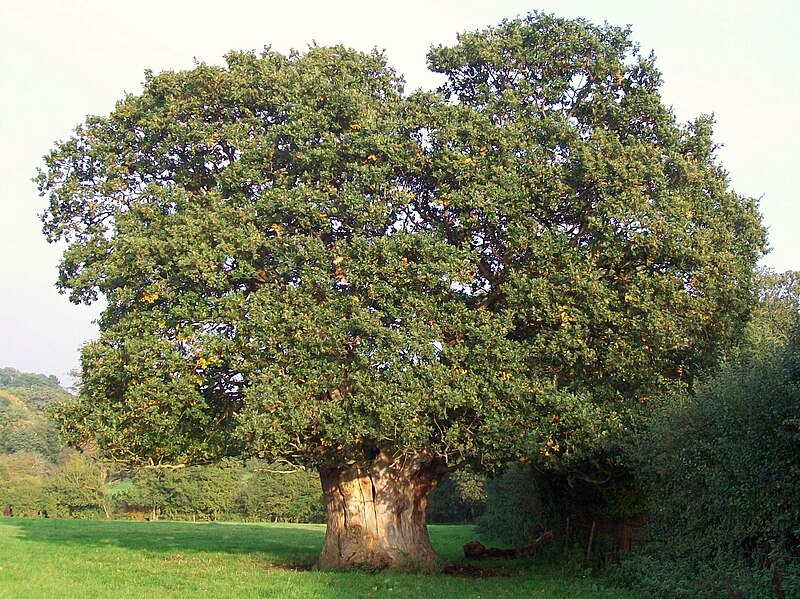 There was once a fine old
oak tree that stood on the edge of a park. It was spring, and the
leaves, which had just come out of their buds after the long cold
winter, were bursting with life and freshness, and the joys of
spring. But one leaf on this tree was not happy like the others.
For beside the old oak tree was a small tree with leaves that were a
beautiful coppery red which turned into pink jets of flame when the
sun shone through them, quite unlike the green of the other trees in
the park. The people who walked through often stopped to admire this
tree for the colour of the leaves, and paid scant attention to the
old oak tree, except to rest in its shade and sometimes to carve
their names in the thick old trunk. The leaf thought the leaves on
the other tree were far more beautiful and splendid than those around
her, and spent many hours gazing longingly at them, wishing she could
be the same colour.
There was once a fine old
oak tree that stood on the edge of a park. It was spring, and the
leaves, which had just come out of their buds after the long cold
winter, were bursting with life and freshness, and the joys of
spring. But one leaf on this tree was not happy like the others.
For beside the old oak tree was a small tree with leaves that were a
beautiful coppery red which turned into pink jets of flame when the
sun shone through them, quite unlike the green of the other trees in
the park. The people who walked through often stopped to admire this
tree for the colour of the leaves, and paid scant attention to the
old oak tree, except to rest in its shade and sometimes to carve
their names in the thick old trunk. The leaf thought the leaves on
the other tree were far more beautiful and splendid than those around
her, and spent many hours gazing longingly at them, wishing she could
be the same colour.
 The leaf trembled at these
words, for it was the first time Old Father Tree had spoken to her.
But she replied “There are many leaves on this tree, but they all
look the same as myself, and no-one notices me or them, for we are
just green leaves like any other. But if I was pink like the leaves
over there, I would stand out from those around me, and maybe when
people looked up they would admire me from among all the other
leaves, as they admire that tree from all the trees in the park.”
The leaf trembled at these
words, for it was the first time Old Father Tree had spoken to her.
But she replied “There are many leaves on this tree, but they all
look the same as myself, and no-one notices me or them, for we are
just green leaves like any other. But if I was pink like the leaves
over there, I would stand out from those around me, and maybe when
people looked up they would admire me from among all the other
leaves, as they admire that tree from all the trees in the park.”